Hub of Cricket Information

best from cricket world

ICC World Cup 2011: Teams & Groups

Bookmark and Share

The ICC World Cup will see 14 participating teams, split into 2 groups, A and B, competing to decide the world’s best ODI team.

Full members of the ICC qualify automatically for the world cup that is held every four years. The 10 full members who have qualified automatically for this 10th edition of the world cup are Australia, Bangladesh, England, India, New Zealand, Pakistan, South Africa, Sri Lanka, West Indies and Zimbabwe.

The four other teams that make up the list of 14 are associate members of the ICC. These teams took part in a qualifying tournament held in South Africa, in which Ireland beat Canada in the final. Holland and Kenya finished 3rd and 4th, respectively, to complete the list of qualifiers.

The teams have been split into groups A and B, each comprising seven teams. Group A has the defending champions, Australia. The other teams in this group are Canada, Kenya, New Zealand, Pakistan, Sri Lanka and Zimbabwe.

Group B has India, who are co-hosting the event. Bangladesh, England, Ireland, Holland, South Africa and West Indies make up the rest of the contenders from the group.

The group matches, played on a round robin basis, involve each team of a group meeting every other team of that group, once. When the 42 group matches – to take place between February 19 and March 20 – are over, the top four teams from each group will have qualified for the quarter-finals, one each scheduled for March 23, 24, 25 and 26.

The semi-finals will take place on March 29 and 30, and the tournament will end with the final set to take place on April 2, 2011, at Wankhede Stadium, Mumbai.

Labels:

posted @ 11:45 AM, ,

Team to beat at World Cup 2011

Bookmark and Share

New Zealand bowler-turned-commentator Danny Morrison predicts that India will be the side to beat at next year's ICC Cricket World Cup.

"I think India has the best opportunity to lift the World Cup this time round," says the 44-year-old from Auckland. "It has to be good for them playing on home turf. It adds pressure but that's part of hosting.

"Sachin Tendulkar, the master, deserves to have some sort of winners' medal hanging round his neck but it's not all about him. Cricket is a tough game and it's also about whether Yuvraj Singh, Virender Sehwag, Gautam Gambhir and MS Dhoni can deliver for India. Can they do it for Sachin?

"You feel that India want something special to happen and this year I think you've got to go with the India team to emulate the 1983 side led by Kapil Dev ," says the former fast bowler who claimed 126 ODI wickets and 160 at Test level.

Also on this week's show, Bangladesh coach Jamie Siddons talks about his side's progress, including its recent first-ever ODI win over England.

"It was a long time before we got our first victory, the boys have played fantastic cricket and when we were in Bristol we were confident of our abilities and our bowling and fielding worked well. The bowling changes reaped rewards for us for that match at Bristol against England," says Siddons.

"I talk to the side about improving their skills and working from day to day, the side need to keep going and getting better and better. We can beat teams we just need to keep backing up the skills we have and improving on all aspects," continues Siddons.

The show can be used in whole or part by radio stations that want cricket content, while the public can also download it straight from the ICC website at http://icc-cricket.yahoo.net/media_interactive_zone/podcast.php.

Also on this week's show there is a full preview of the upcoming Test series between Kumar Sangakkara's Sri Lanka and MS Dhoni's India that gets underway on Sunday 18 July.

Apart from the above interviews, the show has the usual round up of cricketing news and an update of the Reliance Mobile ICC Player Rankings for Test and ODI cricket.

The weekly ICC Cricket World audio show runs for 15 minutes and has been put together by the ICC's global broadcast partner ESPN STAR Sports.(ANI)

Labels: , , ,

posted @ 12:29 PM, ,

The Squads

Bookmark and Share

India: Mahendra Singh Dhoni (capt), Virender Sehwag (vice-capt), Gautam Gambhir, Virat Kohli, Suresh Raina, Rohit Sharma, Ravindra Jadeja, Harbhajan Singh, Praveen Kumar, Zaheer Khan, Ashish Nehra, Pragyan Ojha, Ashok Dinda, Ravichandran Ashwin, Saurabh Tiwary.

Pakistan: Shahid Afridi (capt), Salman Butt (vice-capt), Imran Farhat, Shahzaib Hasan, Umar Akmal, Asad Shafiq, Shoaib Malik, Umar Amin, Kamran Akmal, Abdul Razzaq, Mohammad Asif, Mohammad Amir, Shoaib Akhtar, Saeed Ajmal, Abdul Rehman.

Sri Lanka: Kumar Sangakkara (capt), Muttiah Muralitharan (vice-capt), Mahela Jayawardene, Tillakaratne Dilshan, Upul Tharanga, Thilan Samaraweera, Angelo Mathews, Farveez Maharoof, Chamara Kapugedara, Nuwan Kulasekara, Chanaka Welegedara, Lasith Malinga, Suraj Randiv, Rangana Herath, Thilina Kandamby.

Bangladesh: Shakib Al Hasan (capt), Mushfiqur Rahim, Tamim Iqbal, Imrul Kayes, Jahurul Islam, Junaid Siddique, Mohammad Ashraful, Mohammad Mahmudullah, Mashrafe Mortaza, Naeem Islam, Abdur Razzak, Syed Rasel, Rubel Hossain, Shafiul Islam, Suhrawadi Shuvo.

Labels: , , , , , , ,

posted @ 4:19 PM, ,

Which Team Will Capture the 2010 World Cup Title

Bookmark and Share

Brazil, Italy, Portugal, Spain and Germany are considered to be favorites to win the 2010 FIFA World Cup in South Africa. Which team will be victorious?

Considered to be one of the main sporting events in history, almost one billion spectators will be following the tournament. Many factors will determine which team will clench the top position. How the players work together, how effective the coach brings out the best in players and the strength of the defensive line all determine which team will end up World Cup champions.

Brazil: 2010 FIFA World Cup
Brazil holds a FIFA rank of 1st in the world and is considered joint favorites to win the 2010 World Cup. After producing world-class players, Brazil is the only team that appeared in all the World Cup finals. Brazil has a record winning five World Cup titles (1958, 1962, 1970, 1994, and 2002).

Brazil has four strikers in the team, with Luis Fabiano as the chief goal scorer. The star player has scored 25 goals in 36 matches. A second striker who has been in top form is international star “Kaka”. Considered to be one of the greatest soccer players, there will be no doubt that “Kaka” will entertain during the World Cup.

Spain: 2010 FIFA World Cup
Spain holds a FIFA rank of 2nd in the world. The team continued in fantastic form at the Euro 2008 championships, by winning all ten matches in the World Cup qualifications. Spain are hoping to take the 2010 World Cup title, after appearing in 12 World Cup tournaments with a best-ever finish of 4th place.

The team is loaded with experience, with a majority of players reaching prime. Liverpool striker, Fernando Torres, who underwent knee surgery, might not be in proper shape for the World Cup. However, a setback will not throw the team, particularly with soccer stars such as Sergio Ramus and Xabi Alonso.

Portugal: 2010 FIFA World Cup
Currently, Portugal has a FIFA rank of 3rd in the world. Coach Carlos Queiroz has produced some of the world’s best soccer players. Portugal has had four World Cup appearances, and the Portuguese team wants to finally secure what could be a first World Cup victory. Portugal climbed the ladder of success, with a 4th place in the 2006 World Cup and 2nd place at the 2004 European Championships.

Soccer legend, Christiano Ronaldo will be one of the most imperative players during the entire tournament. Considered to be the most expensive player in the world, one can only watch with sheer anticipation. Portugal may be the team to beat in order to reach the number one position. Almost the entire Chelsea defense is in the Portugal team, that being Jose Bosingwa, Ricardo Carvalho and Paulo Ferreira.

Italy: 2010 FIFA World Cup
The Italian team holds a FIFA rank of 5th in the World. The reigning 2006 World Cup champions still have the experience to outwit many teams in the World Cup. The Italian team has won four World Cup titles, which is only one title behind Brazil. Considered a formidable force, with the guidance of Marcello Lippi, Italy stands an excellent chance of taking the title again.

Gianluigi “Gigi” Buffon is a strong player in the back of the Italian defense and will definitely be a player to watch out for. Another name to beware of in the Italian team is Giuseppe Rossi, considered to be a young exceptional player with lots of potential.

Germany: 2010 FIFA World Cup
Germany has a FIFA rank of 6th in the world. Having not missed a final since 1950, the German team is in impeccable form. Just behind Brazil and Italy, the German team has secured three World Cup titles. The Germans cope seemingly well under pressure at the knock-out stages and have won all four penalty goals faced at previous World Cup games.

Brazil, Spain, Portugal, Italy and Germany are seen as the teams to watch out for in the 2010 FIFA World Cup in South Africa. Regardless of background, race or creed; audiences’ around the world will be glued to the one month tournament. The question at hand is which team will capture the 2010 World Cup title? [Via]

Labels:

posted @ 9:10 AM, ,

Sri Lanka Selectors for the World Cup

Bookmark and Share

Former skipper Aravinda de Silva has been appointed Sri Lanka's chief cricket selector and set the challenge of preparing a team capable of winning a World Cup just nine months away.

''I want another team to win a World Cup,'' said De Silva, whose unbeaten century against Australia in the 1996 World Cup final brought cricket's most prestigious limited-overs title to Sri Lanka for the first time. ''I'll try and work hard and honestly as possible to ensure this task is achieved.''

Sports Minister C.B. Ratnayake on Monday announced the new selection panel which also includes former international wicketkeeper and television commentator Ranjith Fernando, former national player Amal Silva and Shabir Asgaraly, a former first-class cricketer.

The 44-year-old De Silva said his immediate challenge will be to develop depth in every position and identify batsmen who can repair and rebuild an innings if the top order fails.

He said rather than experimenting with new players in the national squad, he'd make players work hard for a place by performing for lower tier teams.

The outgoing committee headed by Ashantha de Mel was accused of inefficiency, favoritism and political bias in team selection.

But Ratnayake assured the new panel that he will not allow any political interference.

Sri Lanka will co-host the 2011 World Cup with India and Bangladesh. No Asian team has won the World Cup in the 50-over format since Sri Lanka's title in '96, also when it was co-hosting the tournament.

Sri Lanka lost the 2007 final to Australia in the Caribbean but has since slipped to No. 6 in the international ODI rankings and fourth in the test rankings.

De Silva retired from international cricket after the 2003 World Cup, having played 308 limited-overs internationals and 93 test matches.

A dashing stroke-making batsman, he averaged just under 43 in test cricket with 20 centuries. He scored 11 hundreds and 64 half centuries in ODIs, and had a strike rate of 81 runs per hundred balls faced.—AP

Labels: ,

posted @ 7:39 PM, ,

Who Will Wind the World Cup?

Bookmark and Share

I Know. Everyone wants to win the World Cup. That’s why they call it the World Cup. But which of the 32 World Cup teams has the biggest reason for wanting to win it? Read on for a list of the 32 teams and my best guess at what’s driving them to victory. Feel free to add/argue different reasons in the comments.

Algeria – The one thing that would make Egypt's non-qualification hurt even more would be an Algerian triumph. I'm not saying that's Algeria's only motivation. But it has to be in there somewhere. Beating France in the final wouldn't hurt either.

Australia – Soccer currently lags behind cricket, rugby, the other football and probably some other sports we’ve never even heard of. A World Cup win could change all that.

Argentina – No wins since Diego Maradona led them to glory in 1986. In that nearly quarter of a century Argentina has consistently been one of the best teams in the world. But no more World Cup trophies. The big narrative for the team in 2010 is Diego Maradona once again. He’s back, he’s as crazy as ever, and he’s in charge of picking the team. But just think how good/mental would it be to see Diego Maradona lift that trophy, and join Franz Beckenbauer and Mário Zagallo as the only men to win the World Cup as both player and coach.

Brazil – Obviously Brazil always wants to win it, and often that’s exactly what happens. They already have five wins, but 2006 was supposed to be the year they made it six. They didn’t. Despite the weight of expectation, I have a feeling most Brazil fans would admit they’d much prefer a win in 2014 when they host the World Cup. Or maybe they want both.

Cameroon – The first African team to make the World Cup quarterfinals in 1990, and the only team until 2002 when Senegal matched them. So first World Cup on Africa soil + Samuel Eto’o = First African World Cup winners?

Chile – The 2010 earthquake destroyed infrastructure and killed over 500 people. The country needs cheering up.

Cote d’Ivoire – This is a country still divided, between rebels and government. But I’m sure pretty much everyone there would agree with the sight of Didier Drogba holding the trophy aloft on July 11th in Soccer City Stadium.

Denmark – Morten Olsen has been the Denmark manager for a about a decade. In international management that’s a lifetime. Maybe two lifetimes. In terms of commitment and time invested in a team, this man deserves a World Cup.

England – Oh, they want it. That one win in 1966 gave England a big drink of glory. Now, 44 years later, they’re very very thirsty. The English Football Association has gone all out and hired the best coach money could buy in Fabio Capello, and with key players like Steven Gerrard, Frank Lampard, Rio Ferdinand and John Terry all either at or around that 30 years old mark, this is the last chance for a certain generation who keep promising to deliver.
France – Like England, France have the blessing/albatross of having won the World Cup, but only at home. Winning it on foreign soil is the big next step that both countries need to take. However, I get the feeling that most in France are more interested in waving goodbye to Raymond Domenech than in winning the trophy in 2010.

Germany – Believe it or not, it’s been a while. Germany hasn’t won a World Cup since 1990. If Michael Ballack was in the squad, then there’d be a an argument for his determination to stop winning runner up medals on the big stage. That same argument can be made for this whole team though, as the majority of this squad lost out to Spain in the final of Euro 2008.

Ghana – If an Africa team is going to win the first World Cup on African soil, then Ghana might be the most likely. Even without Michael Essien, they seem to have the deepest squad. A continent’s hopes rest on you Black Stars.

Greece – The economoy is in the toilet. The people have been rioting in disgust at austerity measures. Nothing is going right. If Otto Rehhagel can repeat his Euro 2004 trick then Greece would be a much happier place in July 2010, if only temporarily.

Honduras – The country is in a bit of a political crisis. A World Cup win wouldn’t necessarily solve the problem. But it would make everyone feel a whole lot better.

Italy – Brazil has won five. Italy four. So the Azzurri are very much the junior partner in the Derby della Mondo right now. But just one more World Cup win would see them level with Brazil as the joint most successful international team of all time.

Japan – We’ve been laughing at coach Takeshi Okada a little, for his semi-final prediction and his I want to quit outburst/misquote this week. But the reason Okada is managing Japan at all is that the man who was supposed to lead them to South Africa – Bosnian coach Ivica Osim – suffered a stroke in 2007 and had to step away. It’s been three years but I imagine a Japanese win will be dedicated to coach Osim.

Mexico – At 37 years old and carrying some extra timber, Cuauhtémoc Blanco does not look like he should be playing international football. But he’s been a great player and deserves a big sendoff. I imagine winning a World Cup would do nicely. Plus it would end the “who’s the best team in CONCACAF” argument with America pretty conclusively.

Nigeria – The Super Eagles win Olymic Gold in 1996, becoming the first African team to do so. Being the first African team to win the World Cup would be a decent follow up.
Netherlands – Total World Cup finals: two (1974, 1978). Total World Cup wins: zero. It’s time the Dutch team won a World Cup.

New Zealand – Because it would upset Australia. Also because – despite their dominance – the New Zealand rugby team has not won the Rugby World Cup since they co-hosted in 1987. They host again in 2011 and expectation is high. But imagine if the soccer team beat them to it and won the World Cup the year before?

North Korea – Because if they win, then North Korean television can show the actual real full actual games on television, rather than the rumoured edited version.

Paraguay – Striker Salvador Cabañas was shot in the head in January 2010. He somehow survived, and was determined to recover in time for the World Cup, but had a bullet lodged in his brain and so won’t be playing in South Africa. His teammates winning the World Cup would be a fitting tribute to his determination.

Portugal – We know Cristiano Ronaldo wants it. It would complete his trophy haul. But maybe the most compelling story is Carlos Queiroz and his quest to convince the world that he’s a proper manager and not just an assistant who’s been overpromoted.

Serbia – First time at the World Cup for Serbia as an individual nation. The 2006 Serbia & Monetenegro adventure didn’t count. So a win would mean a 100% record.

Slovakia – Again, World Cup virgins. And seems like former partners the Czech Republic have had all the glory so far.

Slovenia – I like Slovenia. I’ve even been there. But in this tournament, I – like many others I’m sure – often get confused about exactly which one they are. For the record they’re the team with mountains on the jerseys. If they win this tournament, everyone will remember them forever.

Spain – No World Cup wins to date. But the Euro 2008 victory has finally taken Spain to another level. You can see the confidence as they pass the ball around tac-tac-tac. This is surely Spain’s best ever chance to finally win the World Cup, but also their chance to shed that underachiever tag once and for all. Or to have it etched even deeper. The stakes are high.

South Africa – The hosts. The much maligned hosts. Never before has a nation’s ability to host a tournament been questioned so openly. If the team went all the way and won it, that would be karma in action. Also, would be nice to see the events of the 1995 Rugby World Cup repeated on the soccer field. Though I doubt we’ll see a South Africa vs New Zealand final in 2010.
South Korea – Recently confirmed that North Korea sank one of their ships. So I imagine national pride is a little wounded. Park Ji-Sung and friends could restore it with a trophy.

Switzerland – Border and language sharing nations France, Germany and Italy all have a World Cup. It’s time Switzerland got one too.

USA – American soccer faces the same problem as Australia, in that it still lags behind other sports. America loves a winner, so a World Cup win would be a big help in attracting the patriotic but non-soccer loving sports fan. I also get the feeling that though genuine American soccer fans are happy with the progress from 1990 to present, they’re itching to take that next step up and lift the trophy.

Uruguay – When you look at the list of World Cup winners, Uruguay seems to be on there by mistake. First World Cup winners. Repeat winners in 1950. Then nothing for 60 years. I’m sure they’d love to rejoin the big boys.

Labels: ,

posted @ 7:56 PM, ,

Number 20 Team of the World Cup - Cameroon

Bookmark and Share

Cameroon eventually made it to South Africa after a tumultuous qualifying campaign which saw the Indomitable Lions dispense with German Coach Otto Pfister following a lackluster start to the third round of CAF qualification. Pfister was quickly replaced by Frenchman Paul Le Guen, the former Lyon boss negotiating the final four fixtures of the campaign to narrowly guide his team to the World Cup.

Although Cameroon is widely and quite correctly well-respected in the world game, its current crop of talent has failed to impress since an appearance at the final of the 2008 Africa Cup of Nations in Ghana. The likes of Geremi, Stephane Mbia and Jean Makoun, despite having big reputations in Europe, have flattered to deceive at international level and, as a result, this Cameroonian side has perhaps not reached the levels many expected it to attain. There is certainly enough talent in the squad to compete in the World Cup, but there is much pressure on Le Guen to coax better collective performances from his team this summer if they are to be in with a chance of overcoming Denmark and Japan, their closest group rivals, to progress to a possible last 16 encounter with Italy.

The first of the 20 teams we have covered so far to use a conventional midfield diamond, Le Guen’s Cameroon give themselves something of a defensive insurance policy with Arsenal’s Alex Song, one of Africa’s finest young talents, screening the back four. Song is also used as a platform for counter-attacks, bringing the ball out of defence and playing it to the wide midfielders with Makoun likely to play on the right with the wide left berth very much up for grabs (although Eyong Enoh is perhaps the most credible candidate for the role). Achille Emana, one of the team’s few truly creative players, sits at the head of the diamond feeding the strike partnership of Inter’s Samuel Eto’o, the team’s talisman, and Real Mallorca’s Pierre Webo.

If Le Guen can inject an added passion and urgency into his team, then the Indomitable Lions undoubtedly have the collective abilities to make an impression on this summer’s tournament and battle their way out of a difficult group. However, if the team is gripped by the same malaise which saw it suicidally throw away a winning position in the quarter-finals of the Africa Cup of Nations in January and almost blow its chances of World Cup qualification, it could be a short and painful tournament for Cameroon. {#}

Labels: , ,

posted @ 9:58 AM, ,

Team Profiles

Bookmark and Share

Australia
Winners of the ICC Cricket World Cup trophy for a record four times, in 1987, 1999, 2003 and 2007, Australia will be hoping to better its own achievement by winning the 2011 trophy.

It holds a tournament record 29 consecutive World Cup matches without a loss, a streak dating back to 23 May 1999, where it lost to Pakistan during the group stage of the event.

Australia begins its campaign against Zimbabwe at Ahmadabad and the team will rely on the successful captaincy of Ricky Ponting for a fifth title.

With a strong line-up of players including Mike Hussey, Shane Watson and Mitchell Johnson, it will be one of the favourites to win the title.

Bangladesh

Bangladesh is one of the hosts of ICC Cricket World Cup 2011. It made its CWC debut in 1999 when it surprisingly defeated Pakistan by 62 runs in England.

Arguably the greatest moment in its cricketing history came when it defeated India at the ICC Cricket World Cup 2007 and Shakib Al Hasan's men will be looking for more scalps in 2011.

The side will depend on the all-round skills of Hasan and fast bowler Mashrafe Mortaza, while batsman Tamim Iqbal is expected to be one of the most exciting batters at the event.

Canada

Canada qualified for the ICC Cricket World Cup 2011 after finishing as runners-up to Ireland at the ICC CWC Qualifier 2009 in South Africa.

It first featured in the tournament in 1979 and its greatest moment of glory came in 2003 when it beat Full Member Bangladesh by 60 runs in South Africa. John Davison also broke the record in that tournament for the fastest century in CWC history.

The side will depend on Rizwan Cheema, Umar Bhatti, wicket-keeper Ashish Bagai and all-rounder Sunil Dhaniram for a good show in the event.

England

England has never won the ICC Cricket World Cup, finishing as the runners-up in 1979, 1987 and 1992.
It has not made the semi-finals of the event, since that tournament in 1992, and suffered a disappointing event in 2007, losing four of its seven games in the Super Eight stage.

The batting unit is looking stronger than in recent years with Paul Collingwood, Kevin Pietersen and Eoin Morgan, while the likes of James Anderson and Graeme Swann will be relied upon for wickets.

India

Cricket fever in India exploded after it won the ICC Cricket World Cup in 1983, when 'Kapil's Devils' convincingly defeated the previously invincible West Indies by 43 runs in the final at Lord's.

It is the only time that India has won the event to date, but it did finish as runners-up at the 2003 event. Under the able captaincy of MS Dhoni, who led the side to victory in the inaugural ICC World Twenty20 in 2007, the number-one ranked Test team in the world could very well lay its claim on the 2011 trophy.

The team boasts of a strong batting line-up including maestro Sachin Tendulkar, Virender Sehwag and Yuvraj Singh, while bowlers Harbhajan Singh and Zaheer Khan will be relied upon for wickets.

Ireland

Ireland cemented its place as the top Associate team in the world with a nine-wicket win over Canada in the final of the ICC Cricket World Cup Qualifier in South Africa in April 2009.
It will be looking to repeat its heroics of the ICC Cricket World Cup 2007, when it managed to defeat Pakistan and Bangladesh.

Many from the CWC 2007 squad, including William Porterfield, who scored 515 runs in the qualifying event, Trent Johnston, Boyd Rankin and Niall O?Brien still remain, and it will be looking to secure a Quarter-Final place.

Kenya

Kenya shocked the cricketing world with its fairytale run in the ICC Cricket World Cup 2003 event, reaching the semi-finals by victories over Sri Lanka, Bangladesh, Zimbabwe and New Zealand (match forfeited).
The sub-continent also holds special memories for the African nation when it famously defeated West Indies by 73 runs in the ICC CWC 1996 event.

Kenya is capable of staging a few upsets and will rely mainly on the experience of Steve Tikolo, batting skills of Alex Obanda and Collins Obuya, and bowling of Hiren Varaiya, Peter Ongondo and Lameck Ngoche.

The Netherlands

The Netherlands gained a spot in the ICC Cricket World Cup 2011 by finishing fourth in the qualifying event in South Africa in 2009.

Not new to the tournament - the Dutch have earlier featured in the 1996, 2003 and 2007 CWCs - Peter Borren's side will be look forward to creating an upset similar to its inspirational four-wicket victory over hosts England in ICC World Twenty20 2009.
Stars to watch out for include Ryan ten Doeschate, Bas Zuiderent, Alexei Kervezee and Edgar Schiferli, who was the leading wicket taker in the ICC Cricket World Cup Qualifier in 2009.

New Zealand

No team will be more desperate to win the ICC Cricket World Cup title than New Zealand, who despite reaching the semi-finals of the 1975, 1979, 1992, 1999 and the 2007 event, have never won the tournament.
The last World Cup saw Sri Lanka thrash the Kiwis by 81 runs in the semis and Daniel Vettori's men will be hoping to lift the curse with a tournament win in 2011.

Key players expected to shine in the tournament include Vettori, Ross Taylor, Brendon McCullum, Shane Bond and Kyle Mills.

Pakistan

Pakistan made history when it won its first ICC Cricket World Cup title in 1992. Playing in his final ODI, skipper Imran Khan led his team to an unforgettable 22-run victory over England to claim the trophy. Since then, the closest the team has come to winning the trophy was in 1999, when it suffered an eight-wicket loss to Australia at Lord's in the final.

All eyes will be on Shahid Afridi, who was instrumental in the team's WT20 win, as well as the Akmal brothers? Kamran and Ukmal ? and Umar Gul when it takes on Kenya in its opening game.

South Africa

Having won an ICC event only once - the ICC Champions Trophy in 1998 - Graeme Smith's men will be hoping to improve on its record when it takes on West Indies in its opening game.

The Proteas' success in the tournament extended only as far as the semi-finals of the 2007 event where it was out-witted by Australia by seven wickets at St. Lucia.

The team is not short of talent with the likes of AB de Villiers, Jacques Kallis, Dale Steyn, Hashim Amla, and Herschelle Gibbs, who famously hit six sixes in an over at the last World Cup against Netherlands, relishing the challenge to lift South Africa to world glory.

Sri Lanka

Sri Lanka's moment of glory in the ICC Cricket World Cup arrived in 1996, when the team, led by Arjuna Ranatunga, defeated Australia by seven wickets to claim its first CWC title.

In a repeat of the 1996 event, Mahela Jayawardena led the team to the CWC 2007 final in Barbados, but was defeated by the Australians by 53 runs (D/L method).

With plenty of talent in the squad, which includes the likes of Jayawardena, Kumar Sangakkara, Tillakeratne Dilshan, Nuwan Kulasekara and the spin attack of Muttiah Muralidaran and Ajantha Mendis, the team has every opportunity to reclaim the trophy once again at home.

West Indies

Once considered to be invincible in the game, West Indies will be looking to history for inspiration if it has to win the 2011 event.

Winners of the first two CWC events in 1975 and 1979 at Lord's, the West Indies have much work to do if they want to emulate those two great sides.

Led by the swash-buckling Chris Gayle, who can rip apart the best bowling attack, the team has several key players including Shivnarine Chanderpaul, Ramnaresh Sarwan, Darren Sammy and Dwayne Bravo who have the potential to capture the trophy.

Zimbabwe

Zimbabwe is known to create upsets in the ICC Cricket World Cup as it did against Australia in 1983, England in 1992, and India and South Africa in 1999.

In the ICC World Twenty20 2007, it also delivered one of the biggest shocks in the competition when it achieved a stunning victory over Australia.

Some from that WT20 side still remain and the likes of Tatenda Taibu and Charles Coventry will be relied upon for runs, while Ray Price has established himself as an excellent bowler.

Labels:

posted @ 12:27 PM, ,

Dutch National Football Team in FIFA ‘10

Bookmark and Share

Electronic Arts today announced that the Dutch Nation Football (soccer) team will appear in FIFA ‘10 as they do in real life.

According to today’s press release, EA and the Royal Netherlands Football Association reached an amiable accord to bring all Dutch footballers to digital form in FIFA ‘10, EA’s latest football simulator.
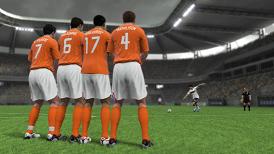
Picture (Device Independent Bitmap) 2

The Dutch team was playable in past FIFAs but players’ likenesses were fake and their kits (jerseys) were ficticious. No more! says EA, as the agreement, based on what, we don’t know, brings the entire Dutch team, including standouts Wesley Sneijder, Robin van Persie, Arjen Robben, Klaas-Jan Huntelaar and Mark van Bommel, and their respective kits to life in FIFA ‘10.

FIFA ‘10 is due out October 2 in Europe (where it’ll sell millions) and in North America on October 20 (where it’ll sulk in isolation on shelves).

Eddie Makuch is Blast's Director of Video Game News Contact him at Makuch.E@BlastMagazine.com

Labels: ,

posted @ 8:01 PM, ,

Soccer-European clubs clash with FIFA over Olympics

Bookmark and Share

By Brian Homewood

European clubs have criticised FIFA and its president Sepp Blatter over the Olympic soccer tournament, saying they have backtracked on an agreement to restrict it to under-21 teams.

"We are very surprised about the change of opinion of FIFA," European Clubs' Association (ECA) chairman Karl-Heinz Rummenigge said in a statement.

"In several meetings, we had the consensus to change the eligibility for the Olympic Games to under-21 players with no over age players.

"We think it's not acceptable and encourage FIFA to maintain its first position."

The Olympic soccer tournament is currently open to players aged under-23 with up to three over-age players allowed per team.

"We remember some statements from Mr Blatter supporting this proposal. We thought it was clearly accepted by FIFA," Barcelona president and ECA vice-chairman Joan Laporta told reporters.

"We expect Mr Blatter to honour his commitments."

The Beijing Games were marked by a number of club-versus-country disputes, the most publicised involving Laporta's Barcelona and Argentina striker Lionel Messi.

Barcelona eventually allowed Messi to take part after winning the case at the Court of Arbitration for Sport (CAS) and Argentina went on to win the gold medal.

"We had the right to keep the player, it was our decision to release him," said Laporta. "They won the gold medal and Messi had a marvellous season for Barcelona, winning the championship."

(Editing by Ed Osmond; to query or comment on this story email sportsfeedback@thomsonreuters.com)

Labels: , , ,

posted @ 12:02 PM, ,

Dunga Calls Up Uncapped Sandro for Brazil

Bookmark and Share

Brazil coach Dunga has handed a first senior call-up to Internacional midfielder Sandro for the World Cup qualifiers against Argentina and Chile.
Click Here

The 20-year-old, who captained the Brazil Under-20 side to the South American title in Venezuela earlier this year, takes the place of Wolfsburg captain Josue who was ruled out after undergoing knee surgery.

Brazil face Argentina on September 5 and Chile on September 9.

Sandro is one of the four home-based players in Brazil's squad, alongside Flamengo striker Adriano, Gremio goalkeeper Victor and Sao Paulo defender Miranda.

Brazil lead the South American World Cup qualifying group with 27 points, one point better off than Chile, three ahead of Paraguay, and five clear of Argentina.

Brazil squad: Julio Cesar (Inter Milan), Victor (Gremio); Maicon (Inter Milan), Daniel Alves (Barcelona), Filipe (Deportivo La Coruna), Andre Santos (Fenerbahce), Luisao (Benfica), Miranda (Sao Paulo), Lucio (Inter Milan), Juan (Roma); Gilberto Silva (Panathinaikos), Felipe Melo (Juventus), Lucas (Liverpool), Elano (Galatasaray), Ramires (Benfica), Julio Baptista (Roma), Kaka (Real Madrid), Sandro (Internacional); Nilmar (Villarreal), Robinho (Manchester City), Luis Fabiano (Sevilla), Adriano (Flamengo).

Labels: , , ,

posted @ 11:24 AM, ,

Can Brazil hold it together for 2010?

Bookmark and Share

Ravi Ubha

The world's biggest party is fast approaching.

In less than 12 months, throngs of joyous fans will journey to South Africa, bringing the World Cup to Africa for the first time.

Aficionados without tickets will snuggle up to the TV: More than 715 million viewers watched Italy's dramatic win over France in the 2006 final in Germany. To put that into perspective for U.S. fans, about 151 million took in this year's Super Bowl.

"From a football point of view, it's fantastic," John Barnes, one of England's legendary players and a World Cup veteran, said in a phone interview. "And then there are the fans. Seeing them outside the grounds, seeing what they go through, and seeing how happy or sad they are, it's all a tremendous occasion."

Come July 11, 2010, in Johannesburg, one set of supporters will be happier than the rest.

Here's an early, early look at some of the teams sure to go deep, led by record five-time champ Brazil.

Yes, they'll all qualify.

Brazil

Talk about a paradox: Brazil, all suave and flair, being coached by a spiky-haired, no-nonsense enforcer who lacked the skills of many of his international teammates.

No matter. Whatever the diminutive Dunga, nicknamed "Dopey," is doing is working fine.

Taking over from the experienced Carlos Alberto Parreira shortly after Brazil's 2006 flop, Dunga, in his first top-level managerial job, molded together a team without egos.

Or at least that's what it sounded like after Brazil's title in June's Confederations Cup in South Africa, capped by a 3-2 comeback win over an inspired and seemingly fate-infused U.S. team.

"In 20 days together, there has not been the slightest problem, and that's something I've never seen from a team before," Dunga, a World Cup winner in 1994, told reporters. "That shows you how professional my players are."

Brazil has ample firepower in the deeply religious Kaka, the 2007 player of the year; the flashy but erratic Robinho; and Luis Fabiano. Felipe Melo and Gilberto Silva, like Dunga in his day, do the dirty work in midfield.

Does Dunga bring back the likes of legendary striker Ronaldo, enjoying a renaissance back home until hurting his hand, and fellow former world player of the year (Brazil has tons of them) Ronaldinho? Ronaldinho, tough to handle at Barcelona, and Kaka failed to click in Germany.

Italy

Marcello Lippi, Italy's cigar-smoking, Godfather-esque manager, has a similar dilemma.

Lippi largely stuck with the old guard: He omitted genius Antonio Cassano and paid the price at the Confederations Cup. The reigning world champions exited early, suffering an embarrassing loss to Egypt and a rout at the hands of Brazil.

Why omit Cassano? As gifted as he is, the striker mixes with trouble too often, and Lippi is a firm believer in the "no I in team" concept.

Lippi garnered seemingly endless praise and sent Italy into rapture while he was leading the Azzurri to a surprising crown, No. 4 overall, in Germany. Now the nation isn't so uplifted.

"I think Italy is quite worried," Massimo Cecchini, a soccer writer with the country's leading sports newspaper, Gazzetta dello Sport, said in a phone interview. "Winning the World Cup was a very special and unexpected moment. Currently our best players are not in that kind of form."

Unless Lippi opts for Cassano, or Francesco Totti, Italy's David Beckham, returns to international soccer, defense figures to be the national team's biggest weapon -- again.

As we've seen before, no one defends better.

Spain

Strength up the middle is a big plus in soccer, and Spain has it in abundance.

Iker Casillas is one of the world's top goalkeepers -- he is fighting it out for the top spot with Italy's Gianluigi Buffon -- Carles Puyol inspires in defense, Marcos Senna cleans up in midfield, and Andres Iniesta sets up goals.

But Fernando Torres and David Villa take the cake. They're the most feared forward partnership around at the international level.

Villa scored four goals and Torres chipped in with two as Spain finally shrugged off its underachieving tag by winning the European Championships last year.

"They're two extraordinary players from a technical standpoint, able to make easy what seems difficult," New York Red Bulls midfielder Albert Celades, one of the few players to have suited up for both Real Madrid and archrival Barcelona, wrote in an e-mail.

Spain fell earlier than expected at the Confederations Cup, but has few deep-rooted concerns. A first World Cup title would mirror France's Bleus, whose golden generation of stars executed a rare World Cup-Euro double in 1998 and 2000.

Germany

Discount the Germans at your peril.

Sure, they lack a Kaka, Lionel Messi or Cristiano Ronaldo, but Germany almost always excels in crunch time.

Germany, amid low expectations, sauntered to the 2002 World Cup final; the home crowd aided in a semifinal showing four years later; and Germany landed in the Euro 2008 final after struggling big-time in the group stage.

"In Germany, everyone knows we don't have the best players, and the only chance to win is as a team," Kai Traemann, who covers soccer for the country's biggest-selling newspaper, Bild, said in a phone interview. "In Spain or Brazil you have stronger players, but in Germany you only have players like [Michael] Ballack and [Miroslav] Klose. The rest have to fight and run for each other."

Midfield maestro Ballack, drifting at club team Chelsea, is transformed in a German jersey, while Klose, a veteran, is the major goal threat. The area of concern is central defense.

Argentina

The Diego Maradona experiment persists. For now.

Arguably the greatest soccer player of all time and the architect of Argentina's 1986 World Cup crown in Mexico, Maradona controversially became manager in October 2008 despite a lack of substantial experience.

Like Dunga, you say? Well, the Brazilian hasn't battled alcohol and drug addiction and problems with his weight. Nor does he curse opponents who suit up against his favorite team back home.

A bright start was tempered by a crushing 6-1 loss to Bolivia -- currently second-to-last in South American qualifying -- and a 2-0 defeat at the hands of Ecuador. Just last month Maradona was linked with a move to Portsmouth, a small fish in the big pond that is England's Premier League.

"In no way would I abandon ship," Maradona retorted in the Argentinean sports daily Ole.

Argentina has only a two-point lead over Ecuador in the race for the final automatic qualifying spot.

If Maradona, or anyone else, can mesh together a squad that features offensive threats Messi, Carlos Tevez and Sergio Aguero -- father of the coach's grandson -- and defensive stalwarts Javier Zanetti and Javier Mascherano, watch out.

London-based Ravi Ubha covers soccer and tennis for ESPN.com.

Labels: , , , ,

posted @ 12:34 PM, ,

Can Brazil Hold it Together for 2010?

Bookmark and Share

By Ravi Ubha

The world's biggest party is fast approaching.


In less than 12 months, throngs of joyous fans will journey to South Africa, bringing the World Cup to Africa for the first time.


Aficionados without tickets will snuggle up to the TV: More than 715 million viewers watched Italy's dramatic win over France in the 2006 final in Germany. To put that into perspective for U.S. fans, about 151 million took in this year's Super Bowl.


"From a football point of view, it's fantastic," John Barnes, one of England's legendary players and a World Cup veteran, said in a phone interview. "And then there are the fans. Seeing them outside the grounds, seeing what they go through, and seeing how happy or sad they are, it's all a tremendous occasion."


Come July 11, 2010, in Johannesburg, one set of supporters will be happier than the rest.


Here's an early, early look at some of the teams sure to go deep, led by record five-time champ Brazil.


Yes, they'll all qualify.


Brazil


Talk about a paradox: Brazil, all suave and flair, being coached by a spiky-haired, no-nonsense enforcer who lacked the skills of many of his international teammates.


No matter. Whatever the diminutive Dunga, nicknamed "Dopey," is doing is working fine.


Taking over from the experienced Carlos Alberto Parreira shortly after Brazil's 2006 flop, Dunga, in his first top-level managerial job, molded together a team without egos.


Or at least that's what it sounded like after Brazil's title in June's Confederations Cup in South Africa, capped by a 3-2 comeback win over an inspired and seemingly fate-infused U.S. team.


"In 20 days together, there has not been the slightest problem, and that's something I've never seen from a team before," Dunga, a World Cup winner in 1994, told reporters. "That shows you how professional my players are."


Brazil has ample firepower in the deeply religious Kaka, the 2007 player of the year; the flashy but erratic Robinho; and Luis Fabiano. Felipe Melo and Gilberto Silva, like Dunga in his day, do the dirty work in midfield.


Does Dunga bring back the likes of legendary striker Ronaldo, enjoying a renaissance back home until hurting his hand, and fellow former world player of the year (Brazil has tons of them) Ronaldinho? Ronaldinho, tough to handle at Barcelona, and Kaka failed to click in Germany.


Italy


Marcello Lippi, Italy's cigar-smoking, Godfather-esque manager, has a similar dilemma.


Lippi largely stuck with the old guard: He omitted genius Antonio Cassano and paid the price at the Confederations Cup. The reigning world champions exited early, suffering an embarrassing loss to Egypt and a rout at the hands of Brazil.


Why omit Cassano? As gifted as he is, the striker mixes with trouble too often, and Lippi is a firm believer in the "no I in team" concept.


Lippi garnered seemingly endless praise and sent Italy into rapture while he was leading the Azzurri to a surprising crown, No. 4 overall, in Germany. Now the nation isn't so uplifted.


"I think Italy is quite worried," Massimo Cecchini, a soccer writer with the country's leading sports newspaper, Gazzetta dello Sport, said in a phone interview. "Winning the World Cup was a very special and unexpected moment. Currently our best players are not in that kind of form."


Unless Lippi opts for Cassano, or Francesco Totti, Italy's David Beckham, returns to international soccer, defense figures to be the national team's biggest weapon -- again.


As we've seen before, no one defends better.


Spain


Strength up the middle is a big plus in soccer, and Spain has it in abundance.


Iker Casillas is one of the world's top goalkeepers -- he is fighting it out for the top spot with Italy's Gianluigi Buffon -- Carles Puyol inspires in defense, Marcos Senna cleans up in midfield, and Andres Iniesta sets up goals.


But Fernando Torres and David Villa take the cake. They're the most feared forward partnership around at the international level.


Villa scored four goals and Torres chipped in with two as Spain finally shrugged off its underachieving tag by winning the European Championships last year.


"They're two extraordinary players from a technical standpoint, able to make easy what seems difficult," New York Red Bulls midfielder Albert Celades, one of the few players to have suited up for both Real Madrid and archrival Barcelona, wrote in an e-mail.


Spain fell earlier than expected at the Confederations Cup, but has few deep-rooted concerns. A first World Cup title would mirror France's Bleus, whose golden generation of stars executed a rare World Cup-Euro double in 1998 and 2000.


Germany


Discount the Germans at your peril.


Sure, they lack a Kaka, Lionel Messi or Cristiano Ronaldo, but Germany almost always excels in crunch time.


Germany, amid low expectations, sauntered to the 2002 World Cup final; the home crowd aided in a semifinal showing four years later; and Germany landed in the Euro 2008 final after struggling big-time in the group stage.


"In Germany, everyone knows we don't have the best players, and the only chance to win is as a team," Kai Traemann, who covers soccer for the country's biggest-selling newspaper, Bild, said in a phone interview. "In Spain or Brazil you have stronger players, but in Germany you only have players like [Michael] Ballack and [Miroslav] Klose. The rest have to fight and run for each other."


Midfield maestro Ballack, drifting at club team Chelsea, is transformed in a German jersey, while Klose, a veteran, is the major goal threat. The area of concern is central defense.


Argentina


The Diego Maradona experiment persists. For now.


Arguably the greatest soccer player of all time and the architect of Argentina's 1986 World Cup crown in Mexico, Maradona controversially became manager in October 2008 despite a lack of substantial experience.


Like Dunga, you say? Well, the Brazilian hasn't battled alcohol and drug addiction and problems with his weight. Nor does he curse opponents who suit up against his favorite team back home.


A bright start was tempered by a crushing 6-1 loss to Bolivia -- currently second-to-last in South American qualifying -- and a 2-0 defeat at the hands of Ecuador. Just last month Maradona was linked with a move to Portsmouth, a small fish in the big pond that is England's Premier League.


"In no way would I abandon ship," Maradona retorted in the Argentinean sports daily Ole.


Argentina has only a two-point lead over Ecuador in the race for the final automatic qualifying spot.


If Maradona, or anyone else, can mesh together a squad that features offensive threats Messi, Carlos Tevez and Sergio Aguero -- father of the coach's grandson -- and defensive stalwarts Javier Zanetti and Javier Mascherano, watch out.

London-based Ravi Ubha covers soccer and tennis for ESPN.com.

Labels: , , ,

posted @ 11:07 AM, ,

Can Brazil Hold it Together for 2010?

Bookmark and Share

By Ravi Ubha

The world's biggest party is fast approaching.


In less than 12 months, throngs of joyous fans will journey to South Africa, bringing the World Cup to Africa for the first time.


Aficionados without tickets will snuggle up to the TV: More than 715 million viewers watched Italy's dramatic win over France in the 2006 final in Germany. To put that into perspective for U.S. fans, about 151 million took in this year's Super Bowl.


"From a football point of view, it's fantastic," John Barnes, one of England's legendary players and a World Cup veteran, said in a phone interview. "And then there are the fans. Seeing them outside the grounds, seeing what they go through, and seeing how happy or sad they are, it's all a tremendous occasion."


Come July 11, 2010, in Johannesburg, one set of supporters will be happier than the rest.


Here's an early, early look at some of the teams sure to go deep, led by record five-time champ Brazil.


Yes, they'll all qualify.


Brazil


Talk about a paradox: Brazil, all suave and flair, being coached by a spiky-haired, no-nonsense enforcer who lacked the skills of many of his international teammates.


No matter. Whatever the diminutive Dunga, nicknamed "Dopey," is doing is working fine.


Taking over from the experienced Carlos Alberto Parreira shortly after Brazil's 2006 flop, Dunga, in his first top-level managerial job, molded together a team without egos.


Or at least that's what it sounded like after Brazil's title in June's Confederations Cup in South Africa, capped by a 3-2 comeback win over an inspired and seemingly fate-infused U.S. team.


"In 20 days together, there has not been the slightest problem, and that's something I've never seen from a team before," Dunga, a World Cup winner in 1994, told reporters. "That shows you how professional my players are."


Brazil has ample firepower in the deeply religious Kaka, the 2007 player of the year; the flashy but erratic Robinho; and Luis Fabiano. Felipe Melo and Gilberto Silva, like Dunga in his day, do the dirty work in midfield.


Does Dunga bring back the likes of legendary striker Ronaldo, enjoying a renaissance back home until hurting his hand, and fellow former world player of the year (Brazil has tons of them) Ronaldinho? Ronaldinho, tough to handle at Barcelona, and Kaka failed to click in Germany.


Italy


Marcello Lippi, Italy's cigar-smoking, Godfather-esque manager, has a similar dilemma.


Lippi largely stuck with the old guard: He omitted genius Antonio Cassano and paid the price at the Confederations Cup. The reigning world champions exited early, suffering an embarrassing loss to Egypt and a rout at the hands of Brazil.


Why omit Cassano? As gifted as he is, the striker mixes with trouble too often, and Lippi is a firm believer in the "no I in team" concept.


Lippi garnered seemingly endless praise and sent Italy into rapture while he was leading the Azzurri to a surprising crown, No. 4 overall, in Germany. Now the nation isn't so uplifted.


"I think Italy is quite worried," Massimo Cecchini, a soccer writer with the country's leading sports newspaper, Gazzetta dello Sport, said in a phone interview. "Winning the World Cup was a very special and unexpected moment. Currently our best players are not in that kind of form."


Unless Lippi opts for Cassano, or Francesco Totti, Italy's David Beckham, returns to international soccer, defense figures to be the national team's biggest weapon -- again.


As we've seen before, no one defends better.


Spain


Strength up the middle is a big plus in soccer, and Spain has it in abundance.


Iker Casillas is one of the world's top goalkeepers -- he is fighting it out for the top spot with Italy's Gianluigi Buffon -- Carles Puyol inspires in defense, Marcos Senna cleans up in midfield, and Andres Iniesta sets up goals.


But Fernando Torres and David Villa take the cake. They're the most feared forward partnership around at the international level.


Villa scored four goals and Torres chipped in with two as Spain finally shrugged off its underachieving tag by winning the European Championships last year.


"They're two extraordinary players from a technical standpoint, able to make easy what seems difficult," New York Red Bulls midfielder Albert Celades, one of the few players to have suited up for both Real Madrid and archrival Barcelona, wrote in an e-mail.


Spain fell earlier than expected at the Confederations Cup, but has few deep-rooted concerns. A first World Cup title would mirror France's Bleus, whose golden generation of stars executed a rare World Cup-Euro double in 1998 and 2000.


Germany


Discount the Germans at your peril.


Sure, they lack a Kaka, Lionel Messi or Cristiano Ronaldo, but Germany almost always excels in crunch time.


Germany, amid low expectations, sauntered to the 2002 World Cup final; the home crowd aided in a semifinal showing four years later; and Germany landed in the Euro 2008 final after struggling big-time in the group stage.


"In Germany, everyone knows we don't have the best players, and the only chance to win is as a team," Kai Traemann, who covers soccer for the country's biggest-selling newspaper, Bild, said in a phone interview. "In Spain or Brazil you have stronger players, but in Germany you only have players like [Michael] Ballack and [Miroslav] Klose. The rest have to fight and run for each other."


Midfield maestro Ballack, drifting at club team Chelsea, is transformed in a German jersey, while Klose, a veteran, is the major goal threat. The area of concern is central defense.


Argentina


The Diego Maradona experiment persists. For now.


Arguably the greatest soccer player of all time and the architect of Argentina's 1986 World Cup crown in Mexico, Maradona controversially became manager in October 2008 despite a lack of substantial experience.


Like Dunga, you say? Well, the Brazilian hasn't battled alcohol and drug addiction and problems with his weight. Nor does he curse opponents who suit up against his favorite team back home.


A bright start was tempered by a crushing 6-1 loss to Bolivia -- currently second-to-last in South American qualifying -- and a 2-0 defeat at the hands of Ecuador. Just last month Maradona was linked with a move to Portsmouth, a small fish in the big pond that is England's Premier League.


"In no way would I abandon ship," Maradona retorted in the Argentinean sports daily Ole.


Argentina has only a two-point lead over Ecuador in the race for the final automatic qualifying spot.


If Maradona, or anyone else, can mesh together a squad that features offensive threats Messi, Carlos Tevez and Sergio Aguero -- father of the coach's grandson -- and defensive stalwarts Javier Zanetti and Javier Mascherano, watch out.

London-based Ravi Ubha covers soccer and tennis for ESPN.com.

Labels: , , ,

posted @ 11:07 AM, ,

Can Brazil Hold it Together for 2010?

Bookmark and Share

By Ravi Ubha

The world's biggest party is fast approaching.


In less than 12 months, throngs of joyous fans will journey to South Africa, bringing the World Cup to Africa for the first time.


Aficionados without tickets will snuggle up to the TV: More than 715 million viewers watched Italy's dramatic win over France in the 2006 final in Germany. To put that into perspective for U.S. fans, about 151 million took in this year's Super Bowl.


"From a football point of view, it's fantastic," John Barnes, one of England's legendary players and a World Cup veteran, said in a phone interview. "And then there are the fans. Seeing them outside the grounds, seeing what they go through, and seeing how happy or sad they are, it's all a tremendous occasion."


Come July 11, 2010, in Johannesburg, one set of supporters will be happier than the rest.


Here's an early, early look at some of the teams sure to go deep, led by record five-time champ Brazil.


Yes, they'll all qualify.


Brazil


Talk about a paradox: Brazil, all suave and flair, being coached by a spiky-haired, no-nonsense enforcer who lacked the skills of many of his international teammates.


No matter. Whatever the diminutive Dunga, nicknamed "Dopey," is doing is working fine.


Taking over from the experienced Carlos Alberto Parreira shortly after Brazil's 2006 flop, Dunga, in his first top-level managerial job, molded together a team without egos.


Or at least that's what it sounded like after Brazil's title in June's Confederations Cup in South Africa, capped by a 3-2 comeback win over an inspired and seemingly fate-infused U.S. team.


"In 20 days together, there has not been the slightest problem, and that's something I've never seen from a team before," Dunga, a World Cup winner in 1994, told reporters. "That shows you how professional my players are."


Brazil has ample firepower in the deeply religious Kaka, the 2007 player of the year; the flashy but erratic Robinho; and Luis Fabiano. Felipe Melo and Gilberto Silva, like Dunga in his day, do the dirty work in midfield.


Does Dunga bring back the likes of legendary striker Ronaldo, enjoying a renaissance back home until hurting his hand, and fellow former world player of the year (Brazil has tons of them) Ronaldinho? Ronaldinho, tough to handle at Barcelona, and Kaka failed to click in Germany.


Italy


Marcello Lippi, Italy's cigar-smoking, Godfather-esque manager, has a similar dilemma.


Lippi largely stuck with the old guard: He omitted genius Antonio Cassano and paid the price at the Confederations Cup. The reigning world champions exited early, suffering an embarrassing loss to Egypt and a rout at the hands of Brazil.


Why omit Cassano? As gifted as he is, the striker mixes with trouble too often, and Lippi is a firm believer in the "no I in team" concept.


Lippi garnered seemingly endless praise and sent Italy into rapture while he was leading the Azzurri to a surprising crown, No. 4 overall, in Germany. Now the nation isn't so uplifted.


"I think Italy is quite worried," Massimo Cecchini, a soccer writer with the country's leading sports newspaper, Gazzetta dello Sport, said in a phone interview. "Winning the World Cup was a very special and unexpected moment. Currently our best players are not in that kind of form."


Unless Lippi opts for Cassano, or Francesco Totti, Italy's David Beckham, returns to international soccer, defense figures to be the national team's biggest weapon -- again.


As we've seen before, no one defends better.


Spain


Strength up the middle is a big plus in soccer, and Spain has it in abundance.


Iker Casillas is one of the world's top goalkeepers -- he is fighting it out for the top spot with Italy's Gianluigi Buffon -- Carles Puyol inspires in defense, Marcos Senna cleans up in midfield, and Andres Iniesta sets up goals.


But Fernando Torres and David Villa take the cake. They're the most feared forward partnership around at the international level.


Villa scored four goals and Torres chipped in with two as Spain finally shrugged off its underachieving tag by winning the European Championships last year.


"They're two extraordinary players from a technical standpoint, able to make easy what seems difficult," New York Red Bulls midfielder Albert Celades, one of the few players to have suited up for both Real Madrid and archrival Barcelona, wrote in an e-mail.


Spain fell earlier than expected at the Confederations Cup, but has few deep-rooted concerns. A first World Cup title would mirror France's Bleus, whose golden generation of stars executed a rare World Cup-Euro double in 1998 and 2000.


Germany


Discount the Germans at your peril.


Sure, they lack a Kaka, Lionel Messi or Cristiano Ronaldo, but Germany almost always excels in crunch time.


Germany, amid low expectations, sauntered to the 2002 World Cup final; the home crowd aided in a semifinal showing four years later; and Germany landed in the Euro 2008 final after struggling big-time in the group stage.


"In Germany, everyone knows we don't have the best players, and the only chance to win is as a team," Kai Traemann, who covers soccer for the country's biggest-selling newspaper, Bild, said in a phone interview. "In Spain or Brazil you have stronger players, but in Germany you only have players like [Michael] Ballack and [Miroslav] Klose. The rest have to fight and run for each other."


Midfield maestro Ballack, drifting at club team Chelsea, is transformed in a German jersey, while Klose, a veteran, is the major goal threat. The area of concern is central defense.


Argentina


The Diego Maradona experiment persists. For now.


Arguably the greatest soccer player of all time and the architect of Argentina's 1986 World Cup crown in Mexico, Maradona controversially became manager in October 2008 despite a lack of substantial experience.


Like Dunga, you say? Well, the Brazilian hasn't battled alcohol and drug addiction and problems with his weight. Nor does he curse opponents who suit up against his favorite team back home.


A bright start was tempered by a crushing 6-1 loss to Bolivia -- currently second-to-last in South American qualifying -- and a 2-0 defeat at the hands of Ecuador. Just last month Maradona was linked with a move to Portsmouth, a small fish in the big pond that is England's Premier League.


"In no way would I abandon ship," Maradona retorted in the Argentinean sports daily Ole.


Argentina has only a two-point lead over Ecuador in the race for the final automatic qualifying spot.


If Maradona, or anyone else, can mesh together a squad that features offensive threats Messi, Carlos Tevez and Sergio Aguero -- father of the coach's grandson -- and defensive stalwarts Javier Zanetti and Javier Mascherano, watch out.

London-based Ravi Ubha covers soccer and tennis for ESPN.com.

Labels: , , ,

posted @ 11:07 AM, ,

Spanish Team Of The Decade 2000-2010

Bookmark and Share

As recently as two years ago, a Spanish Team of the Decade would have been filled with players of exceptional talent, but ultimately ones who never truly lived up to their potential on the international stage. Throughout their memorable history, the Spanish national squad had infamously been known as the best national squad that never won a major trophy — habitually winning their group stage matches before falling in the quarter-finals of World Cup after World Cup.

But today, when we speak of La Furia Roja, we think of a side that not only wins, but also wins with style — a side that reigns atop the world (at least according to FIFA rankings) as the best national team. After a 40-year trophy drought, the Spanish national side broke their reputation for underachieving and forged through the knockout stages of the 2008 European Championships to claim the title. Led by then-coach Luis Aragones, the win served as a catharsis for a national squad teeming with some of the elite players of the world — many of whom are also some of the youngest players on the international stage.

Now, under new coach Vicente Del Bosque, the Spanish squad only looks as if it is getting stronger, beating some of the best sides in European football in international friendlies and World Cup qualifying matches.

This summer, in a tune-up for next summer’s 2010 World Cup in South Africa, Spain looked unstoppable, dominating possession throughout matches and knocking the ball around the pitch with crisp passing and movement. But despite their superb style of play, La Roja faltered against a surprisingly resilient and underrated United States squad in the Confederations Cup semi-finals. The loss, however, was mostly dismissed as an aberration, as injuries and chances that are normally slotted home caught up with the team — a touch of humility after a year of seemingly invincible play.

So as we approach World Cup 2010 with the Spanish Team of the Decade in mind, we do so knowing full well that we may soon be calling today’s Spain squad the Spanish Team of the Ages.

Iker Casillas (2000 - )

Highly touted as the best goalkeeper in the world, 'Saint Iker' now wears the captain’s armband for La Roja. Leading his team to European Championship success in 2008, Casillas was instrumental in helping Spain progress through the quarter-final stage, saving two critical penalties in a shootout with Italy. In October 2008, Casillas and deputy stopper Pepe Reina broke the national record for the most minutes without conceding a goal. The pair went unbeaten for 710 minutes, longer than the legendary Andoni Zubizarreta and Paco Buyo.


Michel Salgado (1998 - 2006)

Now considered a shadow of his former self, Michel Salgado was, for many years, one of the best right-backs in the world. Born in Galicia and frequently representing the autonomous Galician team, Salgado won the first of his 53 caps for Spain in 1998, in an infamous 3-2 Euro 2000 qualifying loss in Cyprus. He continued to serve his country as part of his nation's squads at Euro 2000 and the 2006 World Cup, starting in the former and serving as a backup to Real Madrid team-mate Sergio Ramos in the latter.

Unfortunately, Michel missed out on the 2002 World Cup and Euro 2004, unable to compete due to last minute injuries.


Sergio Ramos (2005 - )

Sergio Ramos broke into Spain’s senior national side at only 18-years-old, making him the youngest player to play for the national team in the last 55 years until the record was again broken by Arsenal's Cesc Fabregas. After an impressive debut, the dynamic young Ramos was awarded a place in the team mainly due to the absence of club team-mate Michel Salgado. He was later announced as part of the Spain World Cup squad in 2006, and eventually replaced Salgado as Spain's first-choice right-back. His marauding runs down the right flank and penchant for attack make him one of the best right-backs in the world, but he is also a versatile defender, able to slot into central defence as well.


Carles Puyol (2000 - )

A rock in the Spanish back line, Puyol won his first international cap in 2000 against the Netherlands, and has remained a regular fixture in defence ever since. He has since represented his country at the 2000 Olympics, 2002 FIFA World Cup, Euro 2004, 2006 FIFA World Cup and Euro 2008. In winning the 2008 European Championships, Puyol started throughout the vast majority of the competition, snuffing out opposing chances; the Spanish defence only conceded two goals in five games as La Roja progressed to an eventual final win against Germany. Serving as vice captain of the Spanish national team, Puyol is an integral figure in defence.


Xavi Hernandez (2000 - )

Xavi made his senior debut in the same match as Barcelona team-mate Carles Puyol and has since been a regular fixture in the Spanish squad. As the architect of the Spanish attack, he is responsible for much of the creation in midfield and is constantly looking to slot passes through for the strikers. During Euro 2008, Xavi played a vital role in Spain's successful campaign. Partnering fellow Barca team-mate Andres Iniesta in the midfield, he was the fulcrum between the defence and the forward line, regularly supplying crucial assists. In the final against Germany, he slid a well-timed pass to Fernando Torres, who converted the winning goal. He is now a crucial member of the Spanish national squad and his importance to the team was summed up as he was selected as the Player of the Tournament at Euro 2008.


Xabi Alonso (2003 - )

While he is well known for his performances at Liverpool, Xabi Alonso was actually called up to the Spanish national squad for his exceptional play with Real Sociedad in 2003. Alonso was praised for his role in the Basque outfit’s success, receiving the Best Spanish Player award by Spanish sports magazine Don Balon. His performances earned him national repute as Inaki Saez, coach of the Spanish national team at the time, called him up to La Seleccion. After Alonso’s international debut, Saez praised the Basque midfielder, saying, “He has a fantastic range of accurate passing and sees football with an extraordinary clarity.” Alonso is now a mainstay in central midfield, specialising in long switches of play through his pinpoint accurate passing and long rifling shots that frequently test opposing keepers.


Marcos Senna (2006 - )

Born in Brazil, Marcos Senna was granted Spanish citizenship in early 2006, thus becoming part of the Spanish squad for the 2006 World Cup and Euro 2008. His performances in Spain’s title winning European Championship campaign earned him the plaudits of some pundits and journalists, who considered Senna as their player of the tournament. A solid presence on the pitch, Senna is the defensive bulldog in the Spanish midfield, pressed with the task of recovering possession and providing link-up play between the back line and the attacking midfield. The Brazilian-born Spaniard also holds a thundering shot in his boots and does not hesitate in trying his hand at a long-range effort from time to time.


Andres Iniesta (2006 - )

Iniesta won his first cap for Spain when he was brought on at half-time in a friendly against Russia and was subsequently called up to the Spanish national squad for the 2006 World Cup. Known for his mazy runs through midfield, Iniesta became a pivotal player in the Spanish midfield and along the left flank, becoming instrumental in helping Spain qualify for Euro 2008. Still very new to La Roja, Iniesta is fast becoming a match-altering player for Spain, having developed a seamless partnership with Barcelona team-mate Xavi Hernandez that will benefit both club and country for years to come (provided he can successfully ward off injury).


Fernando Torres (2003 - )

Torres made his debut for the senior Spanish national team in 2003, playing in a friendly against Portugal, and scored his first goal against Italy in 2004. Serving his country from a very young age, El Nino was selected for Euro 2004 and the 2006 FIFA World Cup (in which he scored three goals, tying David Villa for the top scorer in the Spanish squad for the tournament). Torres’ biggest goal to date with La Roja has certainly been his strike in the Euro 2008 final against Germany — a match Spain won 1-0 to take the championship.

Torres made his 60th appearance for Spain in a World Cup qualifying match against Turkey earlier this year, becoming the youngest player to reach this milestone. His contributions to the Spanish squad continue to be remarkable - in this summer’s Confederations Cup, Torres scored the fastest hat-trick ever by a Spanish player taking just 17 minutes to do so.


Raul (1996 - )

Known simply as Raul, he is likely Spain’s most prolific player in history and with 44 international goals is La Roja’s leading scorer. Earning his first senior cap in 1996, Raul has participated in three World Cups from 1998 to 2006, along with Euro 2000 and Euro 2004, scoring at least one goal in each of the three World Cup competitions and leading as captain of the team throughout. But following a shock 3-2 defeat against Northern Ireland, Luis Aragones controversially dropped Raul from the national squad, preferring David Villa and Fernando Torres instead. Raul is still available for a call up, since he has yet to formally announce his international retirement, and Vicente Del Bosque has said there is still a chance the player could again be called into the national side. But time is not on the aging legend’s side.


David Villa (2005 - )

Making his international debut in 2005, David Villa scored his first goal for La Seleccion in a World Cup qualifying match later in the year. The striker has not looked back since, scoring goals at will for La Roja, becoming so lethal in front of the net that ‘El Guaje’ managed to oust legend Raul from the Spanish national squad. Assuming the former captain’s No. 7 shirt, Villa has delivered goals by the handful for La Roja — some of them crucial in helping Spain advance through the 2006 World Cup group stages and the 2008 European Championships. Villa’s eye for goal has only gotten more keen. This past year, a consistent goal scoring rate saw Villa break the Spanish record of ten goals in one year, previously held by Raul since 1999, by scoring 12 goals. The next target in El Guaje’s sights is Raul’s record 44 international goals. Villa has 25 at the moment, but with only 49 appearances with La Roja, the mark is certainly attainable.


Casillas

Salgado – Sergio Ramos - Puyol

Xavi – Xabi Alonso — Marcos Senna – Iniesta

Torres - Raul - Villa


Do you agree with those who made it into the Spanish Team of the Decade 2000-2010? What would be your ideal XI? Goal.com wants to know what YOU think...

Cyrus C. Malek, Goal.com

Labels: ,

posted @ 8:19 PM, ,

Brazil Team Of The Decade 2000-2010

Bookmark and Share

There's no question that Brazil are both the most popular and most successful national side in the entire world. Having won a record five World Cups, still today they continue to win major titles (the last of these being the Confederations Cup last month). Brazil are currently ranked no.1 in the FIFA World Rankings, and are the favourites going into next year's World Cup in South Africa.

Over the last decade Brazil have possessed an abundance of talented players, like no other nation in the world. The country continues to produce world-class players and this is reflected by the achievements of the Selecao. After the disappointment of the 2006 World Cup, in which Brazil were surprisingly eliminated in the quarter-finals by France, Dunga was hired as their new boss and the 1994 World Cup winning captain made drastic changes to the side, by bringing in fresh meat and overlooking accomplished superstars like Ronaldo, Roberto Carlos, Rivaldo and Cafu.

Although all of the above players will remain in the Brazilian history books for eternity, Dunga's new way of thinking has been of great benefit to the national team, and after a relatively slow start they have returned to being the strongest team in the world.

Gregory Sica selects his best Brazil XI from the past decade.

Formation: 4-4-1-1

Goalkeeper

Marcos – (1999-2005)

Marcos will always be remembered for being Brazil's first-choice goalkeeper as they lifted their fifth World Cup in 2002. The goalkeeper kept four clean sheets in seven matches, but lost his place in the team after the tournament. Although he was recalled to the Selecao for the 2005 Confederations Cup, he only made one appearance, and in October 2006 he announced his international retirement. One of few players to do such a thing, Marcos has remained loyal to Palmeiras throughout his entire career, even if he had attracted the attention of several top European clubs, including Arsenal.

Defence

Maicon – (2003- )

Only since the appointment of Dunga has Maicon cemented his position as the first-choice right-back of the Brazilian national team. Maicon is arguably the best player in his position in the world right now, and he has demonstrated this both with Brazil and Inter Milan. Ever since Cafu's national team retirement in 2006 Brazil have been looking for his replacement and they have now foudn not just one, but two who are worthy. Maicon is solid with his marking and is particularly dangerous when moving forward to attack, and has been impressive enough to edge Dani Alves as the starting right-back.

Lucio – (2000- )

The captain is an irreplaceable figure in the Brazil defence, and his strength and determination have been of great benefit to the Selecao. During the 2002 World Cup he played all 630 minutes of the tournament as Brazil won the title. Four years later he featured for Brazil as they were eliminated in the quarter-finals of the World Cup. Lucio set a FIFA record by not committing a single foul in 386 minutes of the tournament. More recently the defender helped Brazil win the Confederations Cup last month, by scoring a header in the 3-2 victory over the United States in the final.

Edmilson – (2000-2007)

Brazil have not been blessed with too many top class defenders this decade, and it is for this reason that Edmilson makes it into the line-up. A cultured defender/midfielder for Barcelona, Edmilson played his part in the 2002 World Cup triumph, playing in the centre of a back-three and scoring an excellent goal along the way against Costa Rica. Edmilson preferred attacking to defending, despite his position, but when fit and on-form he was nevertheless a very under-rated player.

Roberto Carlos – (1992-2006)

Recognised around the entire globe for his trademark free-kicks, with perhaps the greatest being a spectacular 35-metre swerving effort that fooled French goalkeeper Fabian Barthez when playing for his Brazil in the Tournoi de France in 1997, Roberto Carlos is a legend in his own right. Since making his national team debut in 1992, the former Real Madrid and Inter Milan left-back found wide success with the Selecao. After finishing as a runner-up to France in the 1998 World Cup he played a key role as Brazil lifted the 2002 World Cup. As well as this, with Brazil he claimed two Copa America titles and the Confederations Cup. But after the elimination to France in the 2006 World Cup, Roberto Carlos announced his international retirement.

Midfield

Cafu – (1990-2006 )

Cafu will go down in history as one of the greatest full backs of all time, and certainly the best right wing back of his generation. The former Sao Paulo, Roma and Milan star appeared in four World Cups, lifting the trophy twice in 1994 and 2002, the latter as captain in South Korea & Japan. The stereotypical Brazilian fullback who would attack at will down the flank, Cafu was blessed with everlasting stamina, great technical ability, and a superb cross. He also had great leadership qualities, and will forever be remembered as one of the fairest players in the game, someone who always played with a smile on his face, win or lose. With 142 caps, Cafu is Brazil's highest appearance maker.

Gilberto Silva – (2001- )

Despite his low-profile, Gilberto Silva has become an irreplaceable figure in the Brazilian national team. Despite being relatively unknown before the 2002 World Cup, the defensive midfielder earned himself a place in the team and performed at a very high level as Brazil won the tournament for a fifth time. Often Gilberto's work goes unnoticed, but it has been of great importance for the success of the side. Gilberto is often overshadowed by Brazil's more famous players, but he is a very reliable player, and rarely loses his position in the team. With the arrival of Dunga, Gilberto has continued to be an important member, even if he plays his club football in Greece with Panathinaikos.

Kaka – (2002- )

One of the most gifted players to have ever worn the prized yellow and green shirt of the Selecao, Kaka has been very consistent since becoming an integral part of the Brazilian national team. Although he was part of the Brazil squad that won the 2002 World Cup, Kaka was a bench player and only played 25 minutes. In his official debut as a starter in a World Cup, four years later, Kaka scored a brilliant goal to give his side a 1-0 victory over Croatia. But even if he was one of Brazil's best players, his team bowed out at the quarter-final stage of the tournament. The FIFA World Player of the Year for 2007 was voted the best player of Brazil's triumphant Confederations Cup campaign of 2009, having scored twice in Brazil's opener against Egypt. His recent transfer to Real Madrid is a reward for all the hard work he has put in over the years.

Rivaldo – (1993-2003)

Out of the media spotlight for several years now, but when in his prime Rivaldo was one of the most exciting players on the planet. The former Barcelona, AC Milan and Deportivo La Coruna superstar made 74 appearances for Brazil between 1993–2003 in which he scored 34 goals. During this time he became one of the most important players of the side and he won a number of titles including the 2002 World Cup, the Copa America and the Confederations Cup. Rivaldo is well-known for his bicycle kicks, having scored a number of incredible goals in this manner. But after helping Brazil to their fifth World Cup title, Rivaldo decided to move to Olympiacos of Greece, and although he won three league championships and two Greek Cups with the side, his national team days were now well and truly over.


Ronaldinho – (1999- )

Ronaldinho's national team career has been somewhat of a roller coaster ride. He earned his first cap for Brazil in 1999 and went on to become an essential player of the squad. He made a telling contribution for the national team, helping them win several titles including the World Cup, the Copa America and the Confederations Cup. With his club side Barcelona he was equally impressive, helping them to two successive Spanish titles, the UEFA Champions League, and two Spanish Super Cups. But after a highly disappointing 2006 World Cup Ronaldinho has seemed to lose his touch. Nowadays he has little influence on matches, and his trickery is nowhere to be seen any more. Due to this he has lost his place with Brazil and AC Milan. Even so, everyone is awaiting the revival of the superstar.

Attack

Ronaldo – (1994- )

One of the greatest strikers to have ever graced a football field, Ronaldo will remain in the history books for eternity. The three-time FIFA World Player of the Year is a living legend, and although he won several titles during a distinguished career in Europe, his greatest achievements came with his national team. With Brazil he won several titles, including the World Cup twice, the Copa America twice, and the Confederations Cup. After recovering from a serious knee injury, Ronaldo starred as Brazil won their fifth World Cup in 2002. He won the Golden Shoe for finishing as the highest scorer of the tournament with eight goals, including two goals in the final against Germany.

Although Brazil were eliminated at the quarter-final stage of the following World Cup in Germany, Ronaldo found the back of the net three times to become the highest scorer in the history of the World Cup with fifteen goals. But since then, and with the appointment of Dunga, Ronaldo hasn't appeared for the national team again. However, since agreeing to return to Brazilian football with Corinthians last December, Ronaldo has been in sensational form (he recently scored a hat-trick against Fluminense), and it won't be any surprise if he makes the squad for the World Cup in South Africa next year.

Marcos

Maicon - Lucio - Edmilson - Roberto Carlos

Cafu - Gilberto Silva - Kaka - Rivaldo


Ronaldinho


Ronaldo

Do you agree with those who made it into the Brazil Team of the Decade 2000-2010? What would be your XI? Goal.com wants to know what YOU think...

Gregory Sica, Goal.com

Labels: ,

posted @ 11:28 PM, ,


Light Within

Blog Roll

ss_blog_claim=eebcdd26d5c32d5838ede03f68f01f91 ss_blog_claim=eebcdd26d5c32d5838ede03f68f01f91
